

What AI Misses About Mortgage Affordability in Raleigh NC
What AI misses about mortgage affordability in Raleigh NC, is not a small detail; it is the difference between a number that works in a chat window and a payment that actually holds month after month after the keys are in hand. Kevin Martini at Martini Mortgage Group sees it consistently: a buyer arrives already having consulted ChatGPT, already holding a number, already attached to it. And the number is almost always missing the same five or six things.
This is not a knock on AI. It does math well. What it cannot do is ask the right questions.
TL;DR: What AI Misses About Mortgage Affordability Raleigh NC: The Full Cost Picture
- What AI misses about mortgage affordability Raleigh NC starts with the costs no national calculator can see from a chat prompt.
- Wake County property taxes add $250 to $350 per month to a payment that looks clean on paper.
- PMI on a sub-20% down payment can add $150 to $300 monthly and AI rarely flags when it applies to a specific buyer’s profile.
- Student loan payments counted in the debt-to-income ratio can reduce buying power by $40,000 to $60,000 on a mid-range Raleigh purchase.
- HOA fees in many Raleigh and Cary communities run $200 to $500 monthly and are not reflected in any standard AI estimate.
- Different AI models given identical buyer information produce different affordability answers with no way to know which one is right.
- A real affordability conversation in Raleigh starts with life goals, not a salary field in a chat box.
The Number AI Gives Is Not Wrong. It Is Just Incomplete.
There is a specific way AI handles affordability questions. Someone types in their income, their debts, and sometimes a down payment. The model does the math using standard ratios, typically the 28/36 rule, and produces a purchase price. That number is technically defensible. It reflects the inputs.
What it does not reflect is what it costs to own that specific home in that specific neighborhood in Wake County in 2026.
Someone going through this process late at night, before they have told anyone they are thinking about buying, is not making a bad decision by starting there. The decision becomes costly when they stop there.
The buyers who arrive at Martini Mortgage Group, most prepared, are not the ones who skipped the AI step. They are the ones who understood its limits before they built a strategy around the number it gave them.
What Comfortable Monthly Payment Actually Looks Like in Raleigh
The 28/36 rule tells a buyer how much of their gross income should go toward housing and total debt. It does not tell them what housing actually costs in Raleigh. Those are different conversations.
With median home prices in Raleigh and Cary ranging from $410,000 to $475,000 in 2026, a buyer putting 10% down is looking at a total monthly housing obligation that can land anywhere from $2,800 to $3,500, depending on the property, the tax district, and whether mortgage insurance applies. An AI calculator using national average property tax rates, often cited around 1.1% nationally, will not reflect what buyers actually face in Wake County.
Understanding what a comfortable monthly payment actually means for Raleigh buyers is the work that happens before a price range, not after.
Most AI models apply a generic national property tax estimate. In Wake County, the combined county and Raleigh city rate for fiscal year 2026 sits at approximately $0.8721 per $100 of assessed value. On a home assessed at $450,000, that is nearly $3,924 annually in property taxes — roughly $327 per month. For buyers in Apex or Cary, the municipal rate differs, but the scale is comparable. That $327 is not in the AI estimate. It is in the escrow payment that arrives with the first mortgage statement.
There is a particular feeling that hits when someone realizes the payment they planned around and the payment that shows up in month one are not the same number. That feeling is avoidable. The math is not complicated; it just requires asking about the specific property, not an average.
The Five Things AI Cannot See From a Chat Prompt
Does AI account for Wake County property taxes in a Raleigh affordability estimate?
No. AI affordability calculators apply national average property tax rates unless a buyer manually overrides the input. Wake County’s combined county-plus-municipal rate for a home inside Raleigh city limits currently runs approximately $0.8721 per $100 of assessed value. On a $450,000 home, that produces an annual tax obligation near $3,924, or roughly $327 added to the monthly payment through escrow. Buyers in Cary, Apex, or Holly Springs face different municipal rates applied on top of the county’s 51.71 cent rate. Martini Mortgage Group models the specific tax district of every property before any offer is written, so the monthly payment is never a surprise. For a deeper look at how these numbers work, read about Wake County property taxes and what they actually add to a monthly payment.
PMI — Private Mortgage Insurance
A buyer putting less than 20% down on a conventional loan pays PMI. On a $425,000 purchase with 10% down, PMI typically runs between $125 and $215 per month depending on the credit profile. AI tools mention PMI conceptually. What they cannot do is calculate the specific PMI tier that applies to a real buyer’s credit score and loan-to-value combination. That number is not generic. It is file-specific.
Someone in this position — financially stable, good credit, not at 20% down — is not in a financially risky position. They are simply in a position where the AI estimate is quietly off by $150 to $200 per month.
Student Loan Debt and the DTI Problem
This is where AI affordability estimates diverge most dramatically from what a lender actually sees. A buyer carrying $500 per month in student loan payments has that amount counted fully against their debt-to-income ratio. On a conventional loan, that $500 reduces buying power by roughly $80,000 to $100,000 compared to a buyer with no student debt and identical income. FHA treats income-based repayment (IBR) student loan balances differently from conventional guidelines — and that distinction alone can change whether a buyer qualifies for a specific loan type entirely.
AI does not know which loan program best fits a specific buyer’s student debt structure. It applies a generic DTI model and returns a number. The real answer requires understanding whether the buyer is on IBR, whether they are enrolled in a forgiveness program, and which loan type produces the best outcome for their specific profile.
HOA Fees
Many communities in Raleigh, Cary, Morrisville, and Holly Springs carry monthly HOA fees. In newer planned communities, those fees run $200 to $500 per month. They are counted in the housing expense ratio. AI does not know the HOA fee for a specific address. A buyer shopping neighborhoods where HOAs are common is carrying a variable that can shift their actual qualifying power by $25,000 to $60,000 — and it never appears in a generic chat window estimate.
The Life Plan Question AI Cannot Ask
This is the one that matters most. A buyer planning to change jobs in eighteen months, expand their family in two years, or eventually care for an aging parent has a financial picture that is not captured by income and debt today. The payment that makes sense now may not make sense then. Kevin and Logan Martini ask about the plan, not just the numbers. That distinction is what separates a payment that holds from one that becomes a problem.
When Different AI Models Disagree
Research comparing how Copilot, ChatGPT, and Grok responded to identical first-time buyer affordability prompts found that each tool returned different affordability estimates, different loan type recommendations, and different expectations around qualifying criteria. Given the same inputs, these models produced meaningfully different numbers. A buyer relying on one of them has no way to know whether the answer they received was the high estimate, the low estimate, or somewhere in the middle.
This is not a software bug. It is a reflection of the fact that affordability modeling involves judgment calls — about which DTI threshold to apply, how to weight student debt, which PMI rate to assume — and different models make different calls. A Raleigh buyer cannot comparison-shop AI models for accuracy the same way they can comparison-shop loan estimates from lenders.
Someone spending an evening with this question deserves a real answer. Not five different AI answers with no way to adjudicate between them.
What Kevin Martini sees in Raleigh
I have had a version of this conversation dozens of times. A buyer comes in with an AI-generated number — usually a specific purchase price, sometimes a monthly payment — and it is often within 10% to 15% of where we land together. But that gap matters in this market.
The buyers who feel most confident at closing are not the ones who had the most data. They are the ones who worked through the full picture before the search began. We see it with buyers across Raleigh, Cary, Apex, and Wake Forest: when the payment has been modeled completely — taxes, insurance, PMI if applicable, HOA if applicable, and an honest look at the life plan behind the purchase — the number does not just feel better. It is better.
A client came to us last year after spending two weeks building toward a $440,000 home based on a ChatGPT affordability conversation. The math was not wrong. But the model had used a generic property tax rate, had not factored in the $285 monthly HOA fee for that community, and had not accounted for the income-based repayment student loan balance that, under conventional guidelines, added $475 per month to the DTI calculation. The actual qualifying range for their situation was closer to $375,000. That is not a small difference in Raleigh. That is a different neighborhood. A different school zone. A different decision entirely. We rebuilt the picture from the right starting point, and they closed four months later on a home that made sense for the next ten years, not just the next quarter.
That is the conversation AI cannot have. Not because the technology is inadequate. Because the technology is not asking about the next ten years.
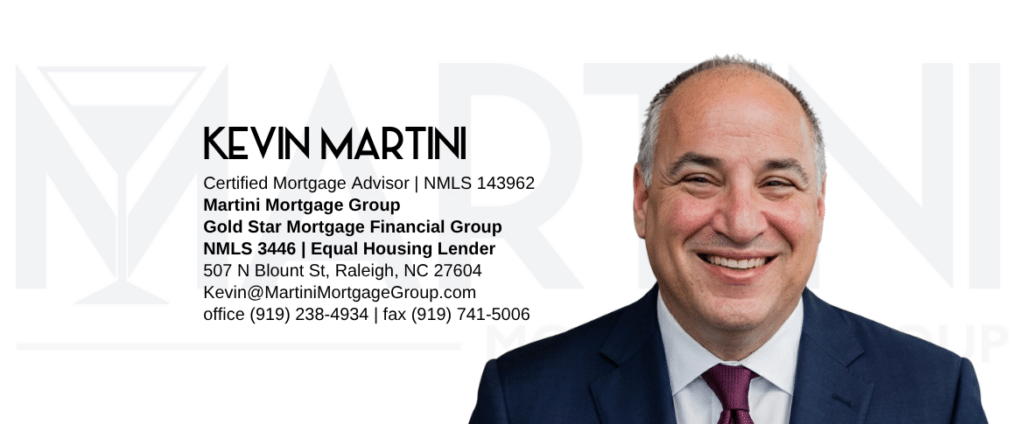
— Kevin Martini, Martini Mortgage Group
The Martini Mortgage Group Affordability Standard
Affordability is not a calculation. It is a structure that holds under the weight of real life. The number AI produces is the floor of a conversation, not the ceiling of an analysis. In Raleigh and across the Triangle, where median prices require buyers to account for Wake County taxes, HOA structures, PMI tiers, and student debt treatment that varies by loan program, the generic estimate creates a false precision. A buyer who plans around it will feel the gap — usually in the first escrow adjustment. The buyers who do not feel that gap are the ones who asked what a Same-As-Cash Mortgage Approval looks like in Raleigh before they asked about price ranges. Structure first. Then search.
Questions Buyers Are Actually Asking About What AI Misses About Mortgage Affordability in Raleigh NC
Can I trust ChatGPT to tell me how much house I can afford in Raleigh?
ChatGPT produces a defensible estimate using standard income-to-debt ratios, but it applies national average assumptions for property taxes, PMI, and DTI treatment that do not reflect Raleigh-specific costs. In Wake County, where the combined county and city tax rate for a home inside Raleigh city limits runs approximately $0.8721 per $100 of assessed value, the generic estimate can understate the monthly housing cost by $200 to $400. Add PMI, an HOA fee, and a student loan balance, and the gap between the AI number and the real underwriting number grows further. Kevin Martini at Martini Mortgage Group model the full Raleigh-specific picture before any offer is written — starting with what a real mortgage pre-approval process looks like in Raleigh.
How does my student loan payment affect what I can afford in Raleigh?
Student loan payments are counted in the debt-to-income ratio that lenders use to determine what a buyer qualifies for. Under conventional loan guidelines, even income-based repayment plans count against DTI at the greater of 1% of the loan balance or the actual payment. FHA handles IBR balances differently, which can change the loan program that makes the most sense for a buyer carrying student debt. A $500 monthly student loan payment can reduce qualifying power in the Raleigh market by $80,000 to $100,000 compared to an otherwise identical buyer with no student debt. The right answer depends on the specific loan type and the specific repayment structure, not a generic calculator output.
What are the real monthly costs of owning a $425,000 home in Raleigh NC?
On a $425,000 home in Raleigh with 10% down in 2026, the total monthly cost includes principal and interest at current rates (roughly $2,400 to $2,550), Wake County and city property taxes (approximately $285 to $310 per month in escrow), homeowners insurance (typically $90 to $130 monthly), and PMI (roughly $125 to $215 depending on credit score). If the community carries an HOA fee, that adds further. Total monthly obligation before HOA: approximately $2,900 to $3,200. With a $300 HOA fee, the number climbs to $3,200 to $3,500. Martini Mortgage Group models the full number for every property before the offer stage, so the payment is never a surprise at closing.
Someone who has read this far already knows what the AI number is. What they do not have yet is the Raleigh-specific version, the one that accounts for Wake County taxes, the HOA fee on the specific community they have been watching, the PMI tier that applies to their credit profile, and a real look at how their student loan balance interacts with the loan type that fits their life.
A no-obligation, judgment-free clarity call with Martini Mortgage Group is built around exactly that conversation; not a rate quote, not a qualification ceiling, but an honest look at the full payment picture for the specific home and the specific life behind the purchase.
That conversation is available at martinimortgagegroup.com, and it changes the number in a way that actually holds.
