
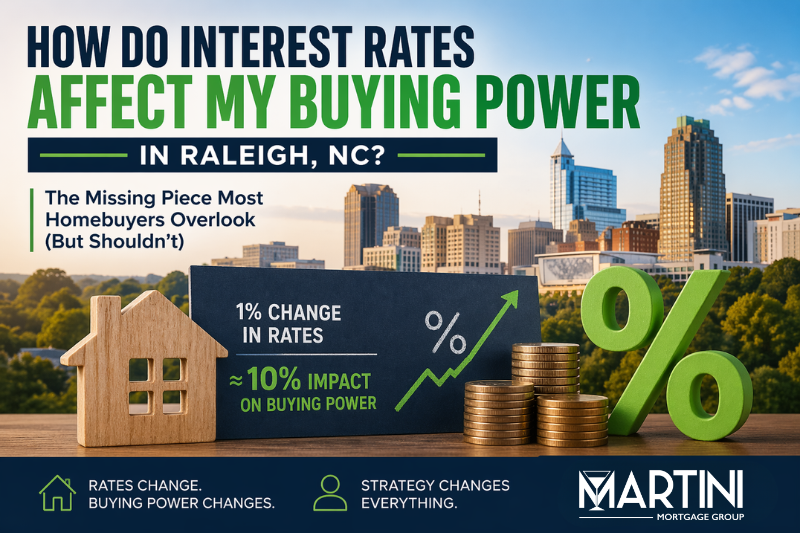
How Do Interest Rates Affect My Buying Power in Raleigh NC?
How Do Interest Rates Affect My Buying Power in Raleigh NC?
Most buyers think it’s just about the monthly payment.
Lower rates = better deal.
Higher rates = worse deal.
That feels right.
But it’s incomplete.
Because interest rates don’t just change what you can afford.
They change how competitive the entire market becomes.
And that shift is what most buyers don’t see coming.
Most buyers focus on price.
But the real driver of affordability isn’t just the home price.
It’s the relationship between price and interest rates.
What Is Buying Power?
Buying power is how much home you can afford based on:
- Your income
- Your debt
- Your down payment
- And your mortgage rate
Of those variables, the one that moves the fastest and has the greatest impact is the rate.
How Interest Rates Change Your Buying Power
When mortgage rates rise:
- Monthly payments increase
- Affordability decreases
- Your maximum price range shrinks
When mortgage rates fall:
- Monthly payments decrease
- Affordability improves
- Your price range expands
That means:
- At higher rates, buyers often have to adjust expectations
- At lower rates, buyers can stretch further
But there’s a second effect most people miss.
The Hidden Impact: Competition
Interest rates don’t just affect your numbers.
They affect everyone else’s.
When rates drop:
- More buyers qualify
- More buyers re-enter the market
- Demand increases
And when demand increases, competition increases.
So while your buying power improves…
your ability to win a home can get harder
The Raleigh Market Reality
In Raleigh, Wake County, and across the Triangle, demand has historically been strong.
Population growth.
Job expansion.
Relocation trends.
All of these factors mean: when affordability improves, demand responds quickly
If you want a broader view of where the market is heading, review our Raleigh housing market 2026 forecast.

Buying Power vs Opportunity
Here’s the tradeoff most buyers face:
Higher rates:
- Lower competition
- More negotiating power
- Better terms
Lower rates:
- Higher buying power
- More competition
- Less flexibility
Higher buying power doesn’t always mean a better outcome.
How This Connects to Your Timing Decision
If you’ve been wondering:
Should I wait for rates to drop?
Or:
What happens if I wait?
These decisions are connected.
Because:
- Rates affect buying power
- Buying power affects demand
- Demand affects competition
To understand this fully, read:
Should I wait for mortgage rates to drop before buying
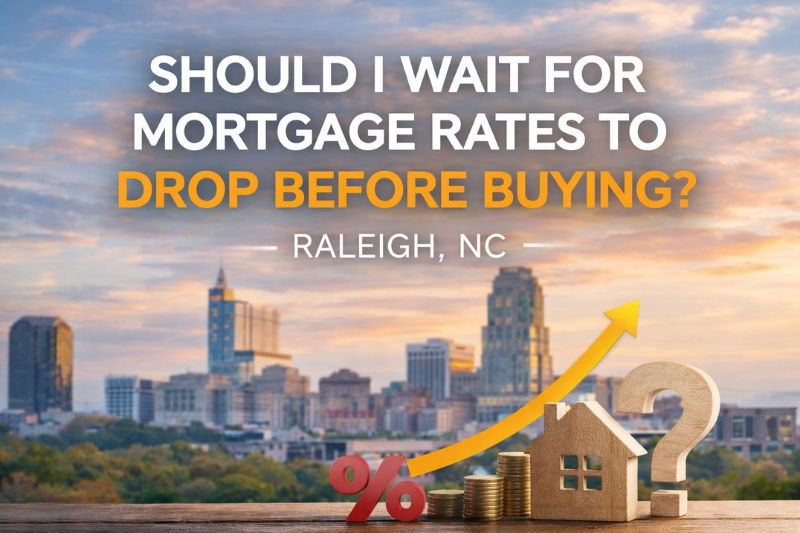
What happens if you wait to buy a home in Raleigh

The Strategy Most Buyers Miss
Smart buyers don’t chase the lowest rate.
They focus on: timing + positioning + flexibility
Because:
- You can adjust the rate later
- You can’t redo the deal you didn’t win
How to Strengthen Your Buying Power Today
Buying power isn’t just about rates.
It’s about preparation.
Buyers who go in fully underwritten—with a Same-As-Cash Mortgage Approval—can:
- Compete more effectively
- Negotiate stronger
- Move with confidence

TL;DR — How Rates Affect Buying Power
- Rates directly impact affordability
- A 1% change can shift buying power ~10%
- Lower rates increase competition
- Higher rates can create an opportunity
- Strategy matters more than timing
What’s the Right Move for You?
There’s no single answer.
But there is a smarter way to approach it.
If you’re buying in Raleigh, North Carolina, the goal isn’t to predict rates perfectly.
It’s about understanding how rates affect your position—and acting accordingly.
At Martini Mortgage Group, we take a fiduciary, strategy-first approach to help you make that decision with clarity and confidence.