
mortgage rates

  • How Much House Can I Afford in Raleigh NC in 2026?

    How much house can you afford in Raleigh, NC in 2026? Home affordability depends on four key factors: income, debt, down payment, and mortgage interest rates. In the Raleigh housing market, even small changes in interest rates can significantly impact buying power, often shifting affordability by as much as 10%. As rates and demand change across Raleigh, Wake County, and the Triangle, buyers must balance affordability with competition and timing. Understanding how these variables work together helps homebuyers make more strategic decisions—focusing on long-term financial positioning rather than simply chasing the highest approval amount.
  • How Do Interest Rates Affect My Buying Power in Raleigh NC?

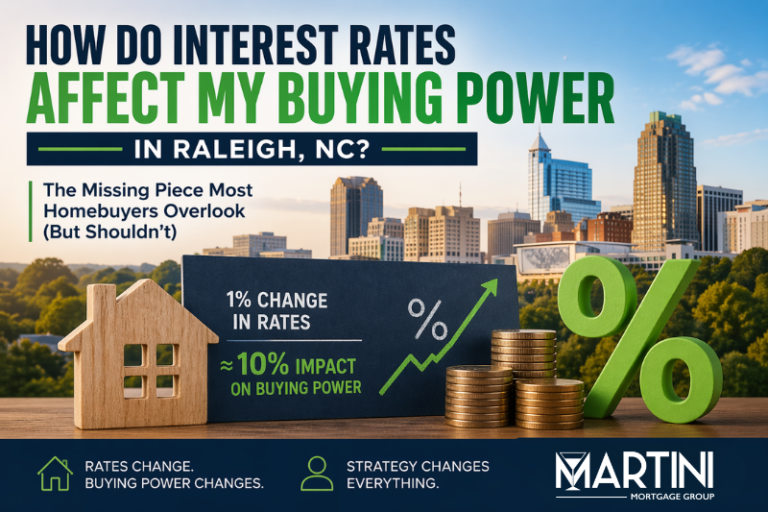
    How do interest rates affect buying power in Raleigh, NC? In today’s Raleigh housing market, even a small change in mortgage rates can significantly impact affordability, often shifting a homebuyer’s purchasing power by around 10%. While lower rates may increase how much you can afford, they also tend to bring more buyers into the market, increasing competition across Raleigh, Wake County, and the Triangle. Understanding this relationship between interest rates, buying power, and market demand helps buyers make more strategic decisions—focusing on positioning rather than trying to perfectly time the market.

  • Should I Wait for Mortgage Rates to Drop Before Buying?

    Should you wait for mortgage rates to drop before buying in Raleigh, NC? In today’s Raleigh housing market, lower mortgage rates may improve affordability, but they also tend to increase buyer demand and competition, making it harder to secure favorable terms. This analysis explains how interest rates, home prices, and market timing interact across Raleigh, Wake County, and the Triangle, helping homebuyers make more strategic decisions based on positioning rather than trying to perfectly time the market.